Reading Report: 08 March 2026
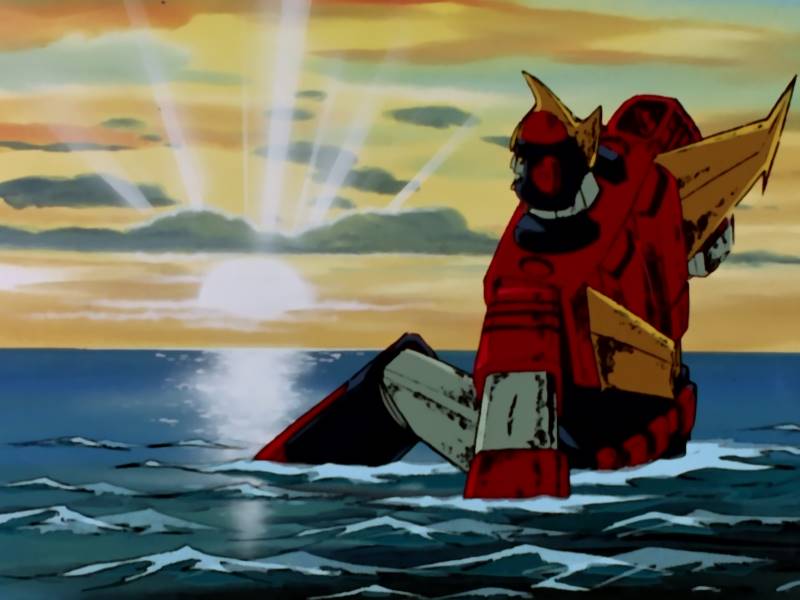
The main theme of the week was that I finally broke through the book pace barrier, but it was at the cost of accepting that videogame progress has completely halted for the time being. I know I try to keep a consistent pace throughout the year, but maybe I need to recognise that my temperament with media consumption is never that consistent, I need to ride the waves when they come and, importantly, I need to accept when a wave isn't moving me. So, games on halt for now. Gonna focus on some reading in the meantime. Who knows, maybe next week I'll feel differently.
- 有害図書の本 (ページ97ー160)
- 無敵超人ザンボット3 (第10-23話)
- 戦国魔人ゴーショーグン 時の異邦人
- BLUE 山本直樹ヴィンテージ・コレクション
- 人間昆虫記(partial)
有害図書の本
Finally picked up the pace with this somewhat, thanks partially
to getting to the part in the book where every other page is just a
gallery of 12 books (or games or movies or magazines) related to the
text on the right side.
I read the interview with Yamamoto Naoki and enjoyed it quite a
lot. The other interviews all went pretty slowly, but this one
felt quite smooth. I think that's mostly because it was the first
time people in the book just talked about stuff. I know this
book is about law and regulation and all whatever, but it's
just a bit boring. I enjoyed the opportunity to read about
some manga I've never heard of (more below), and about the
consequences for an artist under the aforementioned regulations.
There was also a little chat about credit card tyranny (still
a problem!) and how regulations like this are done overseas. Hint:
it's mostly even worse, often totally outlawing adult-only media.
無敵超人ザンボット3
Wow... what an amazing anime. I keep thinking about "Kill 'em All
Tomino", the nickname that apparently casts a bad light on
Yoshiyuki Tomino. I think Tomino's "Kill 'em All" anime are
consistently his best works. Even though I knew that characters
would die in the final episode, I didn't expect just how early
the anime would start to introduce elements of psychological
horror and dread.
Last week I mentioned that Zambot 3 does a good job showing
the drama of super robots from the "ground level", emphasising
the perspective of the defenceless people who are implicit in
all kaiju stories. Now that I've watched the whole series I
can say that they did that element justice, giving plenty of
time to focus on the "little people". They accomplish this
with two dimensions: Kouzuki and the Human Bombs. Kouzuki
acts as a smooth point of view for a character who sees the
conflict from start to finish with no access to the power of
Zambot 3. Instead he uses much more achievable means to help
the people around him. The human bombs are a concept introduced
after the halfway point of the story. Basically, the Gaizock
empire begins abducting people, implanting bombs into them,
and then returning them to human society to turn them into
unwitting weapons. The concept's introduction is scary enough,
however I think the first episode applies it in a distant way
that makes you feel sorry for the victims but able to keep
moving. What really takes it to the next level is that Gaizock
never stops doing it, and who exactly has been booby trapped
is revealed to cause maximum grief. One of Kouzuki's friends
becomes a human bomb. There is no way to "cure" the condition,
so at the end of the episode he is sent away for the safety of
the main crew. He can't handle the knowledge that he'll die
some day soon, tries to run back to everyone, and explodes
horribly while being subdued by other survivors. It's a death
that feels senseless and puts the horror at the feet of the
heroes. Not long later, another even more plot-relevant character
is converted into a bomb. Once again, there is no cure and
no solution - her death is certain from the moment the
viewer sees the star-shaped scar on her back. It feels
hopeless, and it creates stakes that you simply can't deny. The
Zambot 3 team must defeat Gaizock to prevent more
human bombs.
That's not the end of the drama. The final series of episodes
has the Zambot 3 team go into space to destroy the Bandock, the
Gaizock mother ship. It's a fight with several casualties and
sacrifices. It reminded me a lot of the end of Gundam Victory
(another "Kill 'em All Tomino" work, and another 10 out of 10
anime in my opinion). Episodes 22 and 23 in particular were
just pure magic. I loved it. I loved watching the heroes pushing
themselves for Earth even if it meant losing everything.
戦国魔人ゴーショーグン 時の異邦人
I watched this last Sunday afternoon with my fiance. This is
technically a sequel movie to the GoShogun series. I won't
lie, I thought this was just the summary movie but after I
found out I was wrong I thought at least it would be something
GoShogun and I'd get the series after watching it.
I've been taken on a wild ride.
First of all, there is no robot in this movie. References are
made to the original cast's adventures piloting GoShogun, but
everyone is older, they've settled down, and the female pilot,
Remy, is battling a life-threatening illness. Half the film
takes place between her dream state, fighting off her demons,
her illness, and fate, and half the film features her friends
in reality coming together to be there with her. It's a very
dreamlike, feminine story and I really liked that about it. I
loved following Remy's struggle against fate, and I liked how
all of her friends supported her to the end.
But GoShogun isn't in it at all...
BLUE 山本直樹ヴィンテージ・コレクション
I read this after it came up in 有害図書の本. I was a little
bit disappointed to see that it was a total anthology manga; each
chapter was shorter than 50 pages. What really worked for me was
how Yamamoto blends eroticism into compelling, personal narratives.
It sort of reminded me of Minenami Ryo's Himegoto, another one
of my favourite manga series. In my youth I've mostly seen "story" and
"eroticism" as distant storytelling techniques, but mature
storytelling like in BLUE helps show a potential way of
writing that polite society hastily labels "porn".
BLUE is a short story about a boy and girl who bond at the roof of
a school. The girl has access to an aphrodisiac pill called "Blue",
which isn't really explained beyond its existence and its source - two
older men who also involve themselves with the girl. The boy character
seems simultaneously afraid of growing up and quick to blame his
youth on his lack of freedom. By the end of the story there's an
impression on the cyclical nature of Japanese society, the fragility
of male youth, and just how hard it is to really escape it all.
Some of the other chapters were pretty interesting, but I don't think
I have time to yap about them all. It was good!
人間昆虫記
This is a Tezuka Osamu manga that briefly came up in 有害図書の本 when
people in an interview were discussing Tezuka's impact on erotic
media. I was able to read about 90 pages of the manga. So far the plot
is about a woman who moves through life in a sort of parasitic way,
taking what she needs from people and then discarding them. There have
been a handful of supernatural moments, but so far the plot has actually
leaned more towards practical explanations for things.
It has nudity and implied sex, though maybe I wouldn't label it R18 from
what I've seen so far. Maybe it's more like an M15 (rated M for mature)
manga, aha.