Reading Report: 15 January 2023
I was on vacation from Sunday until Thursday which put a damper on my reading for the week, but I still managed to enjoy a variety of things once I got home.
あ゛教科書が教えない日本語: 75 pages (up to page 185)
Continuing from last week, it's basically more history lessons about kana with a bit of a history lesson on why 国語 is a subject in Japanese classes, what it actually means, and how it's changed over time. There was a bit of a "feel the ma"* with talk about the history of the particles を, は, and へ. The mention of their sound changes were pretty standard but the interesting thing was the dissection of the "tone" each particle brought to sentences based on their inclusion. In short, the idea is that を calls special attention to the object it marks. When comparing a sentence where it is or isn't included, the focus on the marked object being of particular importance is stressed. The author claims that it's partially because the を sound is related to 遠 and 呼 (more specifically 乎) and the universal sound of attention, おーい!
For は, the general vibe is sort of what most Japanese learners know; it contrasts against the things not being marked by は. The author claims that in phrases such as こんにちは there is this vibe of "I don't care about 昨日, I don't care about 明日, let us enjoy 今日 now together".
Finally for へ, the whole point is to prime the person to think about directionality. Basically when you hear 東に you don't know if something is happening there or if it's marking a target necessarily; you are forced to wait for more information. With 東へ the mind is drawn to a think about 東の方 before any other information is even spoken. Apparently it's related to 辺 (へん), 沖, and 奥, which sort of make sense since all are vaguely related to space and drawing lines between and towards things.
*feel the ma refers to a trap that many Japanese learners get into where they start to associate single mora sounds with strong and clear meanings. It originated before my time as a sort of server joke of the discord learning server 日本語と英語, when a user made some fairly unjustifiable connections between various words containing ま and then proclaimed "I can feel the ma". In this case I find the associations for individual mora to be more justifiable if only because the author is Japanese and is publishing a book on Japanese linguistics.
よつばと!: Vol 11
Yet another Yotsuba hit. I really enjoy how so many characters have been introduced but each gets a decent amount of screen time to play off of Yotsuba and each other. In particular I always enjoy the return of Yanda in chapters like シャボン玉, Fuuka in くりひろい, and Miura in カメラ. The way ジュラルミン integrated into the story since her introduction has been really nice as well, and the things Yotsuba does with her kind of represent a growth of Yotsuba's character. Of course the last chapter is really sad and it's the first time we see Yotsuba lose her 気 entirely. Thankfully it turns around by the end.
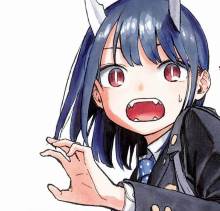
ルリドラゴン: Vol 1
The would-be usurper to よつばと!'s throne. In a way I can see why: The language is fairly simple, there is heavy repetition of some phrases (you will never forget 生える if you read this), and the scenarios (despite being about a girl transforming into a dragon) are pretty down to earth in this volume at least. My biggest gripe is that the dialogue can be a bit... boring at times. I think the lack of role language makes for more realistic dialogue, but it can also make the dialogue dry in a way that doesn't flow well in fiction.
水星の魔女: Episodes 10-12
Making note of anime in this case mostly because it was a satisfying ending to the season for the most part. I really liked the gradual sense of isolation that Sletta felt in episodes 10 and 11 ending with the scene between Miorine and Sletta making up, and the sudden shift into all out warfare in episode 12 was well executed. The juxtaposition between the way adults and children in the series react to death around them was also interesting and really hammers home that the main cast through the series are just kids who don't know what they've gotten themselves into.