Translating Clover's Quadrants into Japanese
written 26 June 2026
In February a friend of mine, knowing of my fondness for Sokoban games, linked me a demo for Clover's Quadrants. The game had some really fresh ideas, a simple premise, great music, and a unique visual style that I adored. I only played the demo for about 20 minutes before reporting my thoughts and moving on.
A few months later, as I was preparing to travel to America, the same friend asked if I'd be interested in helping with an English to Japanese translation of Clover's Quadrants. The developer was a friend of his. I'd never done an E-J translation before, but an opportunity to contribute to the game was enough for me to agree. It wasn't until June 6th that the translation document was provided, and I had a small wedding to attend the following weekend, but I managed to complete my translation by June 18th (with some minor tweaks afterwards). This blog is a brief look at my approach translating from English to Japanese including some examples of fun translation choices I made.
Clover's Quadrants is available right now. Try the demo or get the game and enjoy dozens of hours of sokoban fun with a gorgeous art style, nice music, and some truly challenging puzzles.
Two-Headed Deer's itch page
here.
Clover's Quadrants Steam page
here.
Preparation
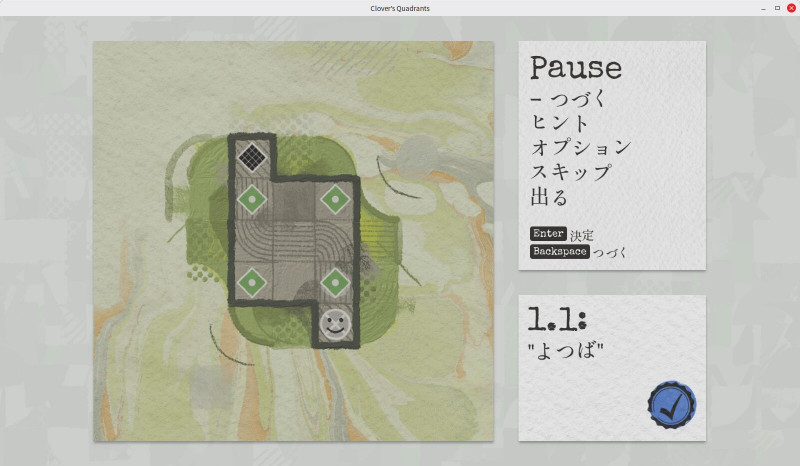
Before any translation began I wanted to play the game at least a bit. I was given a test build of the game (the source of all the screenshots in this article) which allowed me to see everything in context. Having hands-on experience with the game helped me understand the meaning behind certain strings (lines to be translated) in a way that a blank document or spreadsheet could never. In total I spent about 13 hours playing the game. I played each stage at least once and cleared about 50% of them. Anya Spadin, the game's developer and main point of contact, provided notes for every stage explaining her reasoning for each chapter theme and stage name. However, before touching any of the stage names I first worked on all of the menu text, a fairly laborious and boring task (at first, it turned out to be a bit more complicated. See the last part of this article). I don't play a lot of Japanese PC games so I ended up looking up the common terms for Display Mode and Window Focus and a few other technical terms that just don't come up in TV or handheld games. I also spent an afternoon reading old game manuals for Japanese games to try to glean any non-obvious vocabulary I could find, which turned out to be extremely beneficial.
Translation Approach
When producing Japanese sentences my first thought is "how else are people saying what I want to say?" Basically, while any given sentence might be novel, the building blocks of those sentences are made up of previously uttered phrases (or at least shapes). While Clover's Quadrants only has a handful of sentence-like translation strings where this was critical to think about, this principle was also how I approached the short stage titles and menu text. Let's have a look at the stage titles, since they were the most rewarding task in the project.
I would categorise my stage translations into three groups:
- Direct Translations
- Themed Translations
- Referential Translations
Thanks to the diligent comments from Anya, I could understand her thinking behind each title, so there were no ambiguous stage strings.
Direct Translations
In the case where a translation was direct, I was still carefully considering the exact vocabulary to use and their presentation. For example, because chapter 1 lacks a specific theme and acts as a tutorial for basic movement techniques, I decided that the first handful of stages should be written entirely in hiragana (the rounded characters which look like this: あいうえお). Children's books in Japanese often start only with hiragana text, so it gives the set of stages a youthful feeling.
Several stage names are simple the Japanese version of the English word used. My goal when producing a translation is that it's understandable to the target audience and gives roughly the same mood/experience as the original string. Sometimes that calls for very little to be changed, and when that was the case, I translated fairly directly. If it isn't broke, there's no reason to fix it. A stage called Focal Point becomes 集点. A stage called Paralysis becomes 麻痺. Provided the new term is appropriate to the chapter and not completely overbearing, I typically didn't mind a simple translation.
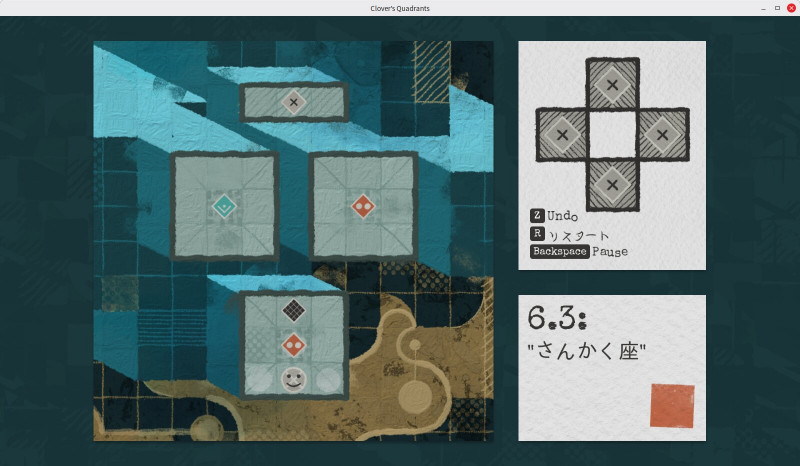
(from 1.0 release)
Themed Translations
Each chapter (called ワールド in Japanese) was given a theme that helped shape translations by setting a boundary around a possibility space. For example, chapter 4 has a mind/dream theme which meant the English titles mostly related to cognition, dreams, and magic. Stage 4.3 titled Loose Threads in English had a double meaning: first, the stage resembles a series of loose threads coming apart from a central section; and second, the name refers to the narrative of a dream often lack closure. In other words, the stage has both a literal and thematic meaning. In order to match the theme I dug around for any expression that might relate both to textiles and cognition and ended up with 編み出す which relates to textiles but can also have an idiomatic use which means "to think up something". While it's not a straight forward translation of the idea (it's lacking the "lacking" mood) it maintains the chapter theme while still (hopefully) evoking in a Japanese player the image of a wild yarn begging to be put into order.
Another example (image above) is chapter 6 which has a night/sky/city theme. The English title, Triad, refers to the three main islands of the stage. Fitting with the night sky theme I decided to reference a triangular constellation to further enhance the mood.
Throughout Clover's Quadrants there are a handful of stages that act as sequels or siblings to each other. For example, in chapter 1 there is a stage called Cavern (どうくつ) which is succeeded in the same chapter by Cavern II. In the case of sequel stages I used the simple numbering system of その2 for the second iteration of stages. In chapter 6 there are a pair of stages called Key and Lock. In Japanese the common word for a key and lock are the same. I could have worked around this by using a unique term for lock such as 閂(かんぬき)but in order to highlight the relationship between the stages I decided to give them the same name in different scripts. So Key, the simpler of the two stages, is かぎ, and Lock is カギ. Observant players will see other paired stages throughout the game both in English and Japanese, and I think they're the most fun to notice.
Referential Translations
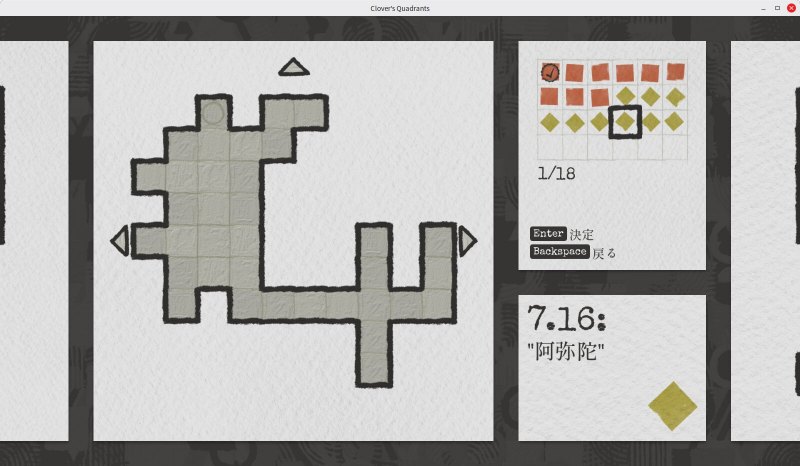
In chapter 7, right near the end of the game, the theme in English is elevated into the philosophical, referencing thought experiments, metaphysical concepts, and other big-brained ideas. I approached some of these in the standard way described above (Ship of Theseus is simply テセウスの船, the direct Japanese term for the concept), however for the final gauntlet of challenge stages I felt the theme of terms like Nihilism and Solipsism would be done more justice if they had a clearly Japanese cultural twist. So I found similar Japanese buddhist terms that related to five stages towards the end (actually six stages but one of them is a sequel to a prior stage). Pictured in this article is stage 7.16, Jacob's Ladder, which I titled 阿弥陀, a reference to both a figure of buddhism and also the gambling devices あみだくじ which resemble oddly-shaped ladders.
Stage 5.2, Factory Default, is a reference to stage 1 of Microban, a sokoban which is frequently referenced in the puzzle/sokoban community. I was unsure if Japanese players would understand the reference, but the stage shape is one that resembles classic Sokoban the most, so with the factory/industrial theme of chapter 5 I decided why not call it 倉庫 (warehouse), a reference to the original 倉庫番 (warehouse keeper) which birthed the genre name.
My goal with referential translations is always to give Japanese players the same general experience as English-language players. Every player has their own history and cultural understanding, but I hope that my use of Japanese cultural references has been both respectful to the source material and to the players who experience my translation.
Long Strings & Politeness
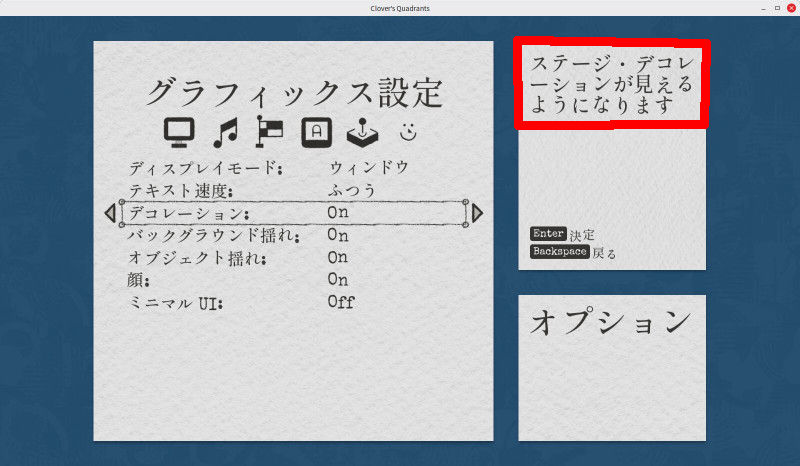
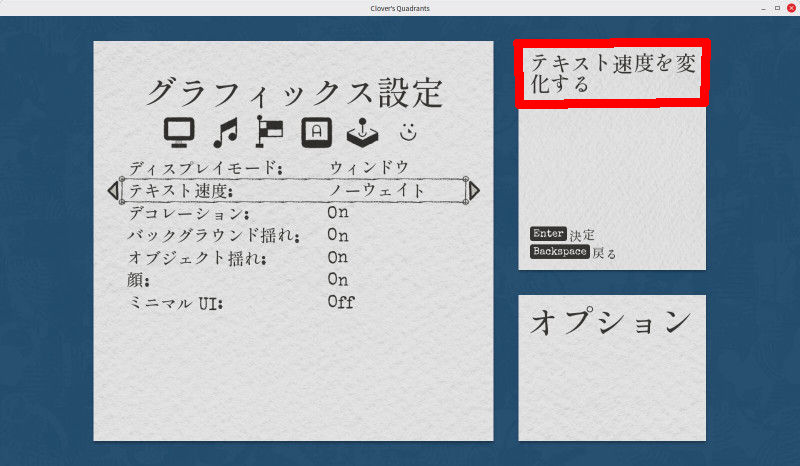
isn't something I've ever thought about.
Red highlights an example of each
in the same general area.
Three of the biggest challenges while translating Clover's Quadrants were (relatively) long strings: the 遊び方 (How to Play) section, the End/Congrats text, and, the description for フリープレイ (Free Play) mode. The other challenge was the politeness of the menus (namely the descriptions for each menu function). Despite having over 7 years of Japanese immersion under my belt, I have not put much effort into mastering my output. You can read my (very messy) Japanese-only Reading Reports (most of the stuff at the very bottom around Jan-Feb 2024) which are presented without correction from the time they were written. I hope that I've become more proficient with my Japanese since writing those, but I still don't consider myself fluent by any means. In any case, I tried my best at the longer strings, attempting to preserve the overall tone of the original English without losing too much information or breaking the text box (this last point was especially tricky for the 遊び方 below).
遊び方
This is the original English text string:
Clover's Quadrants is designed to be a hands-on learning experience. Experiment! Be curious & try to break things. There are hints and skips if you get stuck. Good luck and have fun!
This was my final translation:
Clover´s Quadrantsは いろいろなことを試して徐々に身につけるパズルゲームです。援助が必要と思うとき、ヒントとステージスキップ機能もあります。 Cloverちゃんと一緒に頑張りましょう!
Throughout the game I preserved the name Clover's Quadrants and Clover as they were. Using katakana (these characters アイウエオ), is often an obvious way to transliterate into Japanese, just didn't feel right in these two cases. For one thing, it made the title way too long in places it would be written, and it was also just ugly. If there was a way to add text below the game title I would have loved a transliteration there just to provide reading instructions.
Otherwise when it comes to this string, I erred on the side of polite but encouraging, trying to give the same mood as English that suggests experimentation but offers judgement-free help if needed.
フリープレイ
Free Play is a simple setting in the menu that allows the player to play any stage in the game without limit. The description in English explains everything simply:
Unlocks all chapters. Not permanent and does not affect achievements.
There are three pieces of information here. First, the function of the setting is that it unlocks all the chapters; second, that the act of unlocking everything is not irreversible, that the player can take a peek at the content of the game and then turn the setting off and play in a restricted way at their leisure; and last, that achievements will be unlocked based on completion regardless of the state of this setting. The Japanese version of this sentence is below, though I have to admit I had a lot of help from a Japanese native speaker to make this as concise and natural as possible.
すべてのワールドを開放します。このオプションはいつでも変更可能です。実績解除には影響しません。
The order of information is the same. Unlocks all chapters (すべてのワールド), the option can be changed at will, and achievement progress (実績解除) is unaffected. I've often seen it said that Japanese is a more concise language than English. In some cases I think that's the case, but it certainly isn't always.
By the way, if you're curious to play Clover's Quadrants and are feeling lucky, here's a キー you might be able to use to get yourself a copy of the game at no cost. 87LZC-WFXHQ-YER2P
Politeness in Menus
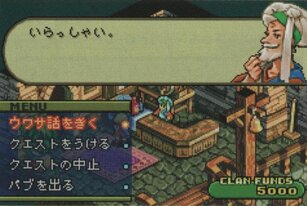
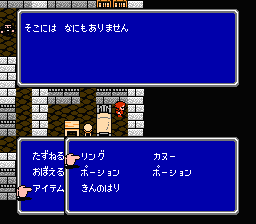
You may have noticed that the two strings above are written in polite Japanese (use of です and ます). Originally I had only written Anya's words (the 遊び方 and Ending) in polite Japanese, considering that text to be hers and therefore wanting to express a politeness directly to the player; and I left the menus in a strictly plain form, assuming plainness was functional. Upon review, my fiance pointed out that some menus commonly use a polite form and some commonly take a plain form and it depends on whether the game/description is describing a player action (する?しない?) or a game state/statement. Basically games tend to describe their own states in a polite way (examples below), but player-directed actions plainly. This gives the impression, I suppose, that the game itself is expressing changes to the player as a staff member of the game might explain it, but the player is selection actions in the game by and for themselves. It sounds complicated, but it makes sense if you just imagine the plain-form verbs in your own voice and the polite-form verbs/sentences with a butler voice. Despite having played many games in the past, this detail is something I'm ashamed to say I've never noticed. Perhaps you, too, have also played hundreds of games in Japanese without noticing. Well, now you will.
Conclusion
Thanks for reading and enjoy Clover's Quadrants. I will keep an eye on Japanese players of the game and report back about the general reception to the game and translation and perhaps we'll see a part 2 of this debrief soon. Have fun puzzlin'.